

Affordable Passenger Cars with Lowest Repair Costs and Longest Lifespan

Affordable Passenger Cars with Lowest Repair Costs and Longest Lifespan

The true cost of vehicle ownership is rarely reflected solely on the showroom window sticker. Instead, it accumulates quietly over a 15-year lifecycle through unexpected repair bills, routine maintenance fees, and steep depreciation curves.

For budget-conscious drivers looking to maximize every dollar, a select group of affordable passenger cars combines rock-bottom maintenance costs with the mechanical endurance to cross 250,000 miles without missing a beat.

The Formula for Low-Cost Longevity

What drives long-term ownership costs down? Achieving exceptional lifespan and minimal repair bills requires specific engineering traits:

  • Naturally Aspirated Powertrains: Engines operating without complex turbochargers or high-stress forced induction tend to experience lower thermal stress and significantly fewer component failures over time.
  • Parts Availability and Aftermarket Support: Vehicles built in massive volumes benefit from an abundance of both OEM and aftermarket replacement parts, keeping mechanic labor and component costs remarkably low.
  • Conservative Mechanical Tuning: Simpler electronics, reliable transmissions, and conservative
Affordable Passenger Cars with Lowest Repair Costs and Longest Lifespan Read More
How Software-Defined Vehicles and Artificial Intelligence Are Transforming Auto Industry Engineering

How Software-Defined Vehicles and Artificial Intelligence Are Transforming Auto Industry Engineering

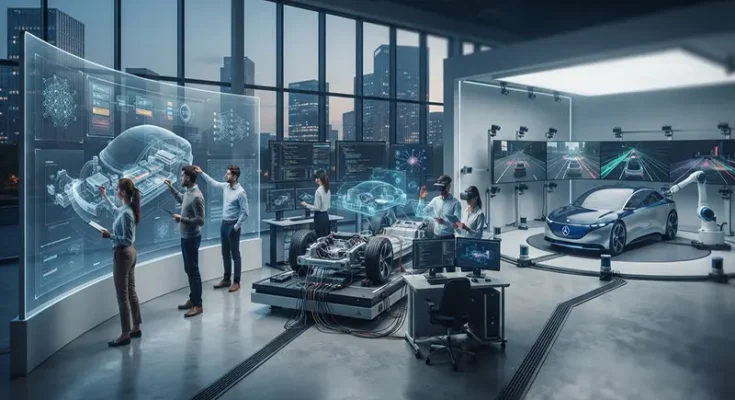
For over a century, the automotive industry defined itself by horsepower, displacement, and mechanical craftsmanship. Engineering success was measured in engine blocks, transmission gear ratios, and chassis dynamics. Today, however, that legendary mechanical race has been eclipsed by lines of code, neural networks, and over-the-air updates.

The convergence of Software-Defined Vehicles (SDVs) and artificial intelligence is fundamentally upending traditional automotive engineering, shifting the entire industrial paradigm from hardware-centric manufacturing to continuous, software-driven mobility ecosystems.

The Shift from Hardware to Software-Defined Architecture

For decades, modern cars operated on decentralized networks choked by dozens—sometimes over a hundred—of disparate Electronic Control Units (ECUs), each running proprietary software from different suppliers. This siloed architecture made updating vehicle features nearly impossible once a car left the factory floor.

The emergence of the Software-Defined Vehicle has shattered this model. Automakers are rapidly transitioning toward centralized domain controllers and powerful vehicle computers that govern distinct zones (such …

How Software-Defined Vehicles and Artificial Intelligence Are Transforming Auto Industry Engineering Read More