For decades, purchasing a new or used vehicle meant spending an entire Saturday afternoon trapped under glaring fluorescent dealership lights, haggling over numbers scribbled on four-square worksheets. Today, however, that traditional showroom floor has expanded directly into the consumer’s living room.
Rather than being rendered obsolete by digital-first online startups, traditional auto dealerships are radically transforming their operations. By blending physical inventory with seamless omnichannel digital sales platforms, dealerships are successfully adapting to meet modern consumer demands.
The Digital Shift: From Brick-and-Mortar to Omnichannel Retail
Modern car buyers behave entirely differently than shoppers of previous generations. Before ever setting foot on a physical lot, today’s consumers research vehicle specifications, crash ratings, market values, and financing rates online.
To capture this tech-enabled audience, dealers have shifted toward an omnichannel model. This approach bridges the gap between digital and physical realms, allowing customers to complete up to 80% of the transaction—such as trade-in valuations, credit pre-qualifications, and payment calculations—digitally. The physical showroom is then reserved for what it does best: test drives, final vehicle inspections, and streamlined delivery.
Technological Upgrades: CRM, Virtual Showrooms, and Digital F&I
Behind the scenes, dealerships are investing heavily in enterprise software to modernize every step of the sales pipeline.
1. Intelligent CRM and Lead Routing
Gone are the days of internet leads sitting unattended in an inbox for hours. Dealerships now utilize advanced Customer Relationship Management (CRM) tools and conversational AI assistants that instantly qualify online shoppers, answer inventory questions, and book appointments 24/7.
2. Virtual Showrooms and Interactive Tools
Websites are no longer static digital brochures. Modern dealer sites feature 360-degree exterior and interior walk-arounds, real-time lot inventory syncing, and augmented reality (AR) color and trim configurators that give buyers total clarity before making a trip.
3. Digitizing the F&I Office
The Finance and Insurance (F&I) department—historically the biggest bottleneck in vehicle purchasing—has gone digital. Secure online portals allow customers to review financing terms, select protection products, and sign electronic documents ahead of time, slashing dealership transaction times from hours down to minutes.
The Evolving Role of the Salesperson and the Physical Lot
As software handles more of the administrative burden, the physical dealership environment and its staff are undergoing a cultural transformation.
- From Haggler to Product Specialist: Sales consultants are shifting away from high-pressure negotiation tactics. Because the customer already knows the price and vehicle details from online research, the salesperson acts more like a consultative product guide and technical expert.
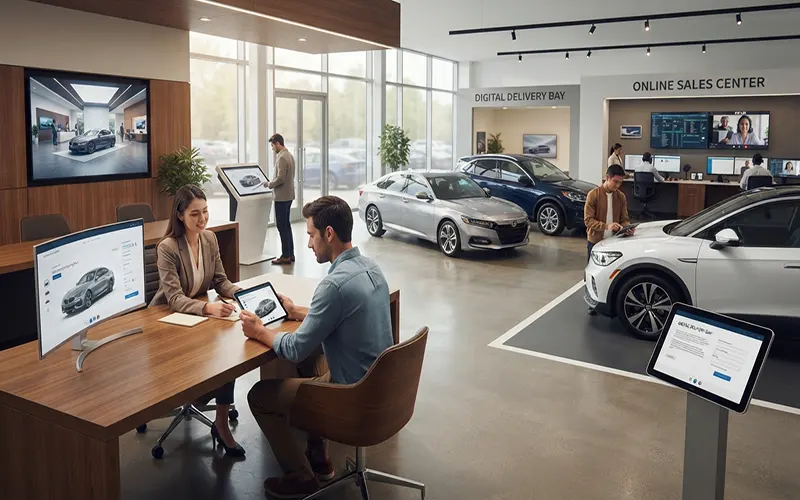
- Redesigning the Showroom Space: Traditional desk clusters and cramped sales bullpens are being replaced by open-concept delivery lounges, comfortable technology bars, and relaxed consultation spaces.
- Concierge and Home Delivery Services: Many dealerships now offer complete home-delivery options, where a product specialist brings the paperwork and the newly purchased vehicle directly to the customer’s driveway for a final walkthrough.
Future of Retail
The future of automotive retail is neither purely online nor entirely physical—it is a sophisticated hybrid model built on convenience, transparency, and speed. Dealerships that successfully merge digital agility with local service trust are eliminating friction, reducing overhead, and dominating the modern automotive marketplace.