

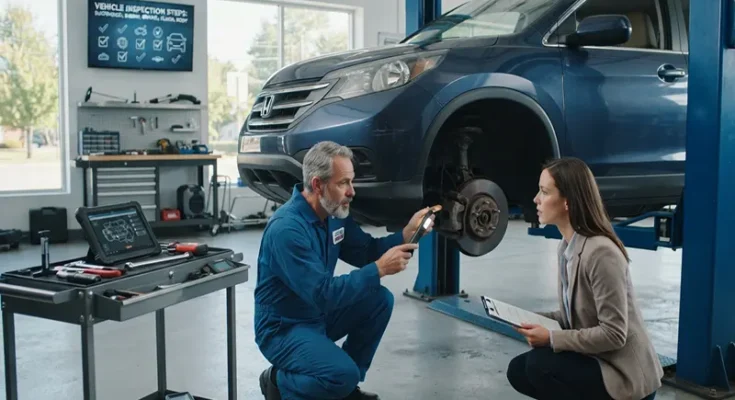
How to Inspect High Mileage Cars to Ensure Long Lifespan Before Buying

How to Inspect High Mileage Cars to Ensure Long Lifespan Before Buying

Buying a car with 150,000 or 200,000 miles on the odometer can feel like a high-stakes gamble. However, to the informed buyer, purchasing a well-maintained high-mileage vehicle is a masterclass in maximizing capital without sacrificing reliability.

Successful high-mileage vehicle ownership relies not on hoping for the best, but on executing a rigorous, methodical inspection framework that separates a well-maintained mechanical survivor from a rolling financial trap.

Step One: Paperwork and Provenance

Before turning a single bolt or opening the hood, the paper trail tells the true story of how the vehicle was treated.

  • The Power of Service History: A documented oil-change ledger consistently outweighs a lower odometer reading. Look for regular maintenance intervals—oil changes every 5,000 to 7,500 miles, transmission fluid flushes, and cooling system servicing. A well-documented history proves the previous owner invested in preventative care.
  • Decoding Vehicle History Reports: Utilize comprehensive reporting tools to track title branding (salvage,

How to Inspect High Mileage Cars to Ensure Long Lifespan Before Buying Read More
How Southeast Asian Manufacturing Hubs Are Shaping the Future of the Global Auto Industry

How Southeast Asian Manufacturing Hubs Are Shaping the Future of the Global Auto Industry

For decades, the global automotive map was defined by traditional heavyheads in Detroit, Wolfsburg, and Tokyo. Today, the beating heart of automotive assembly and supply-chain reinvention is rapidly migrating southward.

Powered by strategic government policies, abundant critical mineral reserves, and an aggressive influx of global electric vehicle (EV) investment, Southeast Asian manufacturing hubs are transforming from regional consumer markets into indispensable architects of the future global auto industry.

The New Geopolitics of Production: The Rise of the ASEAN Corridor

The evolution of Southeast Asia’s automotive sector has moved far past simple supply-chain diversification or “China Plus One” risk hedging. Instead, the Association of Southeast Asian Nations (ASEAN) bloc has established an integrated, high-value manufacturing powerhouse defined by complementary national specializations:

  • Thailand: Long recognized as the “Detroit of Asia,” Thailand acts as a robust vehicle assembly and export anchor, aggressively expanding into battery pack production and advanced automotive electronics.
  • Indonesia: Leveraging
How Southeast Asian Manufacturing Hubs Are Shaping the Future of the Global Auto Industry Read More