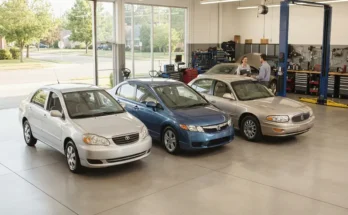
Buying a car with 150,000 or 200,000 miles on the odometer can feel like a high-stakes gamble. However, to the informed buyer, purchasing a well-maintained high-mileage vehicle is a masterclass in maximizing capital without sacrificing reliability.
Successful high-mileage vehicle ownership relies not on hoping for the best, but on executing a rigorous, methodical inspection framework that separates a well-maintained mechanical survivor from a rolling financial trap.
Step One: Paperwork and Provenance
Before turning a single bolt or opening the hood, the paper trail tells the true story of how the vehicle was treated.
- The Power of Service History: A documented oil-change ledger consistently outweighs a lower odometer reading. Look for regular maintenance intervals—oil changes every 5,000 to 7,500 miles, transmission fluid flushes, and cooling system servicing. A well-documented history proves the previous owner invested in preventative care.
- Decoding Vehicle History Reports: Utilize comprehensive reporting tools to track title branding (salvage, flood, or rebuilt), previous regional operating environments (such as road salt exposure in rust-belt states versus dry southern climates), and ownership consistency.
The Cold-Start and Engine Bay Assessment
How an engine behaves the moment it wakes up in the morning provides unvarnished insight into its internal health.
- The Cold-Start Ritual: Always arrange to view the vehicle when the engine is completely cold. Arriving unannounced allows you to listen for hidden lifter ticks, timing chain rattle, or abnormal piston slap during the first thirty seconds of operation. Watch the exhaust plume for excessive blue smoke (burning oil) or white smoke (coolant leak).
- Under-the-Hood Diagnostics: Inspect fluid colors and reservoirs. Engine oil should not look like chocolate milkshake (indicating a blown head gasket). Check for weeping gaskets around the valve covers and timing cover. Beware of an engine bay that has been aggressively pressure-washed; sellers sometimes use this tactic to hide active oil leaks. Finally, evaluate rubber hoses and serpentine belts for dry rot and cracking.
Underneath the Vehicle: Chassis, Rust, and Suspension
A high-mileage car’s mechanical components live a hard life, and the chassis bears the brunt of that burden.
- The Frame Check: Crawl underneath with a flashlight. Distinguish harmless surface oxidation on exhaust components from structural rust rot on unibody pinch welds, subframes, or body-on-frame rails. Frame structural integrity is non-negotiable.
- Suspension and Drivetrain Wear: Check rubber suspension bushings for tearing and dry rot. Inspect the CV axle boots for grease spraying, which indicates a torn boot. Pull the transmission dipstick (if equipped) and check the fluid: it should be bright red or translucent amber, not pitch black, and it should never smell burnt or contain visible metallic flakes.
The Dynamic Test Drive and Professional PPI
The final phase evaluates how all components interact under real-world operating conditions.
- Evaluating Brakes and Shifting: Pay close attention to transmission shift quality. Hesitation, slipping, or harsh clunking between gears is a major red flag. Test the brakes for pulsation (indicating warped rotors) and ensure the vehicle tracks straight on the highway without pulling or wandering due to worn steering rack components.
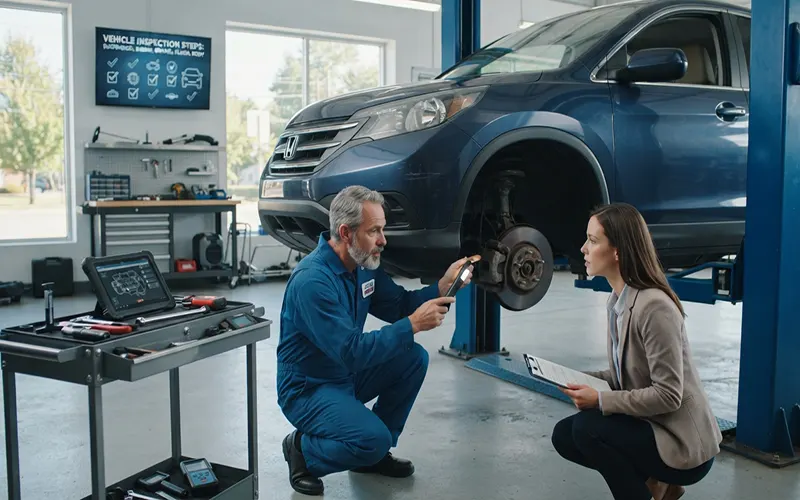
- The Non-Negotiable Final Step: Never skip a professional Pre-Purchase Inspection (PPI). Before handing over any money, pay an independent, certified third-party mechanic to put the car on a lift, run a diagnostic scan for cleared computer codes, and provide an objective assessment of impending repair costs.
Inspecting a high-mileage car is an exercise in discipline and detail. By meticulously analyzing service records, performing cold-start evaluations, examining the undercarriage, and securing a professional pre-purchase inspection, you remove the guesswork from buying a used car. A methodical approach ensures your next high-mileage vehicle delivers years of dependable, cost-effective transportation.