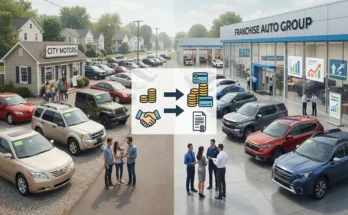
Independent auto dealerships operate in a hyper-competitive market where agility is everything. While major franchise groups and national online platforms rely on massive corporate budgets, independent dealers win by moving faster, targeting local demand precisely, and making every vehicle on the lot work harder.
Achieving sustainable profitability requires more than a crowded forecourt or sporadic advertising. True operational success demands a synchronized system where intelligent inventory management and high-converting digital marketing feed into one another.
The Modern Buyer’s Journey: Your Website Is the Real Showroom
For today’s car shopper, the physical visit to your lot happens much later in the purchasing cycle. Long before a potential buyer steps onto your asphalt, they have already walked your digital aisles on their smartphone.
- The Virtual First Impression: Your website serves as your primary showroom floor. If it is slow, difficult to navigate on mobile devices, or lacks transparent pricing and up-to-date photos, shoppers will bounce to a competitor in seconds.
- Hyper-Local Search Optimization: Independent dealerships thrive on local convenience. Claiming and optimizing your Google Business Profile, maintaining consistent NAP (Name, Address, Phone) citations across the web, and earning a steady stream of authentic Google reviews ensure you capture high-intent local buyers searching for terms like “used car dealer near me”.
Smart Inventory Management: Sourcing, Aging, and Turnover
Inventory is your most expensive asset. How you source, price, and rotate your vehicles dictates your cash flow and overall profitability.
- Data-Driven Sourcing: Moving away from guesswork at wholesale auto auctions requires tracking local demand trends, regional search volumes, and fast-turnover price points. Stock the vehicles your local market actually wants rather than what happens to be cheap at the block.
- Managing the “Days-in-Stock” Metric: Every day a vehicle sits unsold on your lot, it accumulates holding costs and loses potential margin. Track your days-in-stock closely. If a unit crosses a critical threshold (such as 45 to 60 days), execute an immediate pricing adjustment, refresh its online merchandising, or transition it to wholesale channels before it eats your profit.
- Merchandising Excellence: High-quality inventory presentation is non-negotiable. Clean, professional exterior and interior photography, transparent vehicle history disclosures, and detailed descriptions build immediate trust online.
The Synergy Loop: Aligning Marketing with Your Lot
Digital marketing and inventory management should never operate in silos. When marketing efforts are dynamically linked to what is happening on your lot, marketing waste plummets and lead conversion rises.
- Real-Time Feed Integration: Ensure your website inventory feeds, social media vehicle catalogs, and third-party marketplace listings update instantaneously. Advertising a car that sold three days ago frustrates shoppers and burns advertising budget.
- Promoting Fresh Stock and Price Drops: Build automated marketing workflows—such as weekly “new arrival” email blasts or targeted social media campaigns highlighting newly adjusted prices—the moment vehicles hit the lot or experience a markdown.
- Targeted Inventory-Led Ads: Instead of generic dealership branding ads, run exact-vehicle paid search or social retargeting campaigns. If a buyer views a specific three-row SUV or fuel-efficient commuter car on your site, serve them ads featuring that exact vehicle and its current price.
Operational Takeaways
Digital marketing and inventory management are two sides of the same profitable coin. Independent dealerships that succeed in a crowded market treat their website as an extension of their forecourt, use data to keep inventory turning rapidly, and align every marketing dollar directly with live vehicles. By prioritizing operational consistency over fleeting marketing fads, independent dealers can leverage their agility to outperform larger, slower-moving competitors.