

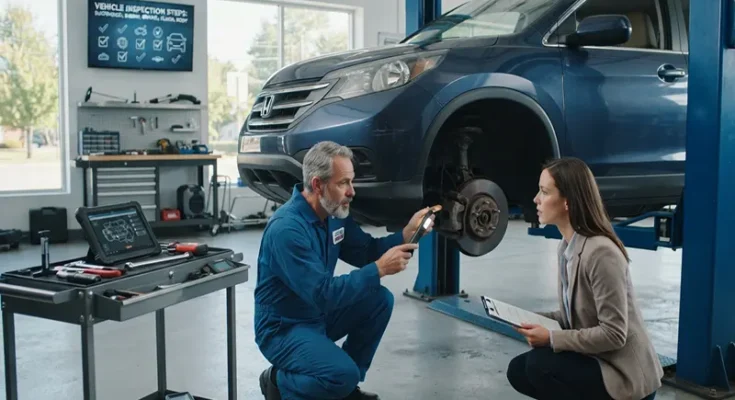
How to Inspect High Mileage Cars to Ensure Long Lifespan Before Buying

How to Inspect High Mileage Cars to Ensure Long Lifespan Before Buying

Buying a car with 150,000 or 200,000 miles on the odometer can feel like a high-stakes gamble. However, to the informed buyer, purchasing a well-maintained high-mileage vehicle is a masterclass in maximizing capital without sacrificing reliability.

Successful high-mileage vehicle ownership relies not on hoping for the best, but on executing a rigorous, methodical inspection framework that separates a well-maintained mechanical survivor from a rolling financial trap.

Step One: Paperwork and Provenance

Before turning a single bolt or opening the hood, the paper trail tells the true story of how the vehicle was treated.

  • The Power of Service History: A documented oil-change ledger consistently outweighs a lower odometer reading. Look for regular maintenance intervals—oil changes every 5,000 to 7,500 miles, transmission fluid flushes, and cooling system servicing. A well-documented history proves the previous owner invested in preventative care.
  • Decoding Vehicle History Reports: Utilize comprehensive reporting tools to track title branding (salvage,

How to Inspect High Mileage Cars to Ensure Long Lifespan Before Buying Read More
Longest Lasting Family SUVs with Proven High Mileage Vehicle Longevity

Longest Lasting Family SUVs with Proven High Mileage Vehicle Longevity

Family haulers endure some of the toughest operating environments on the road—from daily school drop-offs and sports carpools to cross-country road trips laden with luggage, sports gear, and pets.

While many modern crossovers are designed strictly for short-term comfort, a select group of family SUVs features legendary, truck-based frames or heavily over-engineered architectures capable of cruising past 250,000 miles with basic, disciplined maintenance.

The Engineering Blueprint of a 250,000-Mile Family SUV

What separates a family vehicle that breaks down early from one that becomes a generational survivor? It comes down to fundamental manufacturing principles:

  • Body-on-Frame vs. Unibody Durability: Full-size giants utilize rugged body-on-frame construction designed to absorb heavy towing loads and twisting stresses. Meanwhile, elite unibody crossovers achieve long lifespans through conservative powertrain tuning and over-engineered transmissions.
  • Naturally Aspirated Powerplants: Engines built without complex, high-pressure turbochargers experience lower thermal and mechanical stress over hundreds of thousands of cycles.
  • The Maintenance
Longest Lasting Family SUVs with Proven High Mileage Vehicle Longevity Read More
Affordable Passenger Cars with Lowest Repair Costs and Longest Lifespan

Affordable Passenger Cars with Lowest Repair Costs and Longest Lifespan

The true cost of vehicle ownership is rarely reflected solely on the showroom window sticker. Instead, it accumulates quietly over a 15-year lifecycle through unexpected repair bills, routine maintenance fees, and steep depreciation curves.

For budget-conscious drivers looking to maximize every dollar, a select group of affordable passenger cars combines rock-bottom maintenance costs with the mechanical endurance to cross 250,000 miles without missing a beat.

The Formula for Low-Cost Longevity

What drives long-term ownership costs down? Achieving exceptional lifespan and minimal repair bills requires specific engineering traits:

  • Naturally Aspirated Powertrains: Engines operating without complex turbochargers or high-stress forced induction tend to experience lower thermal stress and significantly fewer component failures over time.
  • Parts Availability and Aftermarket Support: Vehicles built in massive volumes benefit from an abundance of both OEM and aftermarket replacement parts, keeping mechanic labor and component costs remarkably low.
  • Conservative Mechanical Tuning: Simpler electronics, reliable transmissions, and conservative
Affordable Passenger Cars with Lowest Repair Costs and Longest Lifespan Read More